Research Assistant ProfessorDepartment of Language Science and TechnologyThe Hong Kong Polytechnic University
Wanjiang
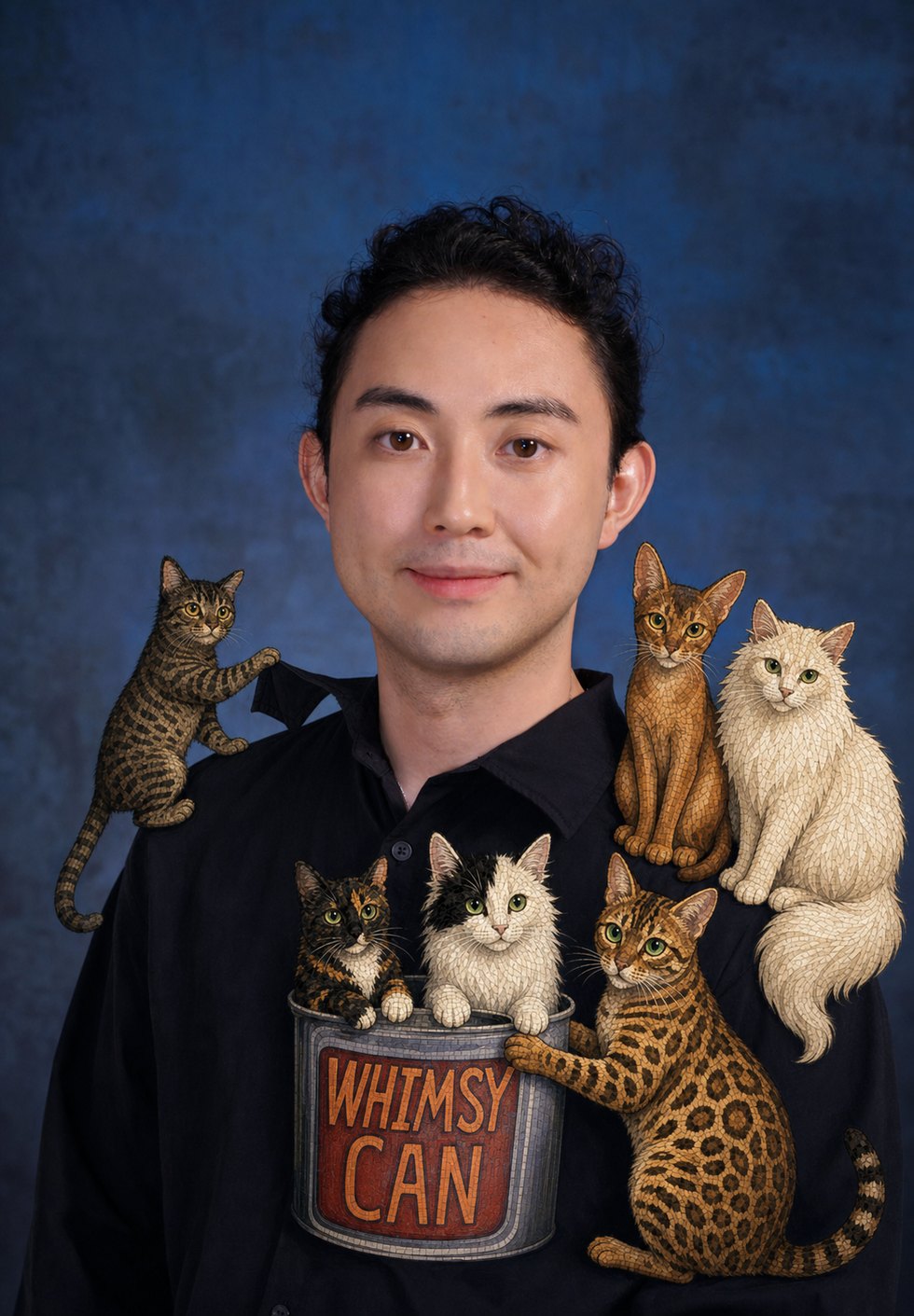
Jacob Zhang
I study how digital technologies reshape human life: the rhythms they impose on our days, the interactions their designs invite, and the lifestyles they quietly re-pattern.
01
News
-
2026
New paper on corporate AI communication in Korea, with Sora Kim, Chen Silvia Zhang, and Yingru Ji, published in Public Relations Review.
-
2026
Joined the Department of Language Science and Technology (LST) at The Hong Kong Polytechnic University (PolyU) as Research Assistant Professor.
-
2024
Completed my PhD in Communication at CUHK and stayed on as postdoctoral research fellow at the Digital Media Data Initiative (DMDI), School of Journalism and Communication, CUHK.
02
Research
My work sits at the intersection of computational social science and computer-mediated communication, and centres on a single question: how do digital technologies shape human life?
Ⅰ
Technology & social time
The temporal rhythms of digital media use: how they form, and with what consequences for individuals and societies.
Ⅱ
Platform design & engagement
How the design features of platforms steer users’ interactions, from engagement bait to geolocation cues that polarise group behaviour.
Ⅲ
Technology & lifestyle
How emerging technologies, most recently generative AI, re-pattern the textures of everyday life.
Methodologically I work with large-scale digital trace data, natural experiments, causal inference, and large language models. My research has appeared in Computers in Human Behavior, Social Media + Society, Telematics and Informatics, Public Relations Review, Environmental Communication, Journal of Health Communication, and Journalism, among others.
Education
- 2024PhD in Communication, The Chinese University of Hong Kong
- 2019MA in Communication, Wuhan University
- 2016BA in Journalism, Anhui University
03
Selected publications
Peer-reviewed journal articles · * corresponding author
2026
2023
I cue you liking me: Causal and spillover effects of technological engagement bait
Mediated fire and distant suffering: The global spectacle of Australian bushfires in Nature 2.0
Silence is golden? Mitigating different types of online firestorms of Fortune 100 corporations on Twitter
From grains to a tower: Residents’ self-organized actions in the early stage of COVID-19 — An analysis of organizational communication in a Wuhan residential WeChat group
閆岩、時元皓、舒暢、張婧瑋、張皖疆(2023)。聚沙成塔:新冠疫情早期的居民自組織行動——武漢某小區業主微信群的組織傳播分析。《新聞與傳播研究》,30(6),67–85。
2022
Mapping the global flow of computational communication science scholars
Authority-led conspiracy theories in China during the COVID-19 pandemic: Exploring the thematic features and rhetoric strategies
Depicting the emotion flow: Super-spreaders of emotional messages on Weibo during the COVID-19 pandemic
Emotional expressions in the online memory of the “Karamay Fire” on Baidu Tieba (2006–2018)
閆岩、張皖疆(2022)。百度貼吧中「克拉瑪依大火」記憶的情感表達(2006–2018)。《新聞大學》,(3),100–116。
2020
Gossip at one’s fingertips: Predictors of celebrity news on Twitter
The duality of memory writing: The change of memory structure regarding the “Karamay Fire” on Baidu Tieba
閆岩、張皖疆(2020)。數字化記憶的雙重書寫:百度貼吧中「克拉瑪依大火」的記憶結構之變遷。《新聞與傳播研究》,27(5),73–93。
04
Software
Beyond papers, I build research infrastructure: platforms that put computational methods and AI in the hands of researchers.
ChatDMDI
An integrated AI platform I designed, built, and maintain for the School of Journalism and Communication at CUHK, where faculty and students work with multiple large language models side by side for research and learning.
Social Movement Lens
A human–AI collaborative research engine for studying global social movements. Expert-coded data meets semantic search, geospatial and temporal visualisation, and an AI agent for conversational analysis.
05
Teaching
My teaching interests sit where computation meets communication. I care about making technical methods feel within reach.
Teaching interests
- Computational communication research methods
- Statistics and causal inference
- Large language models and human–computer interaction
- AI programming and application development
- AI agent development and applications
- Quantitative research methods
Guest lectures
- AI Agent for Everyone — Department of Language Science and Technology, PolyU
- Scrolling Xiaohongshu with an AI Summarizer: Everything AI Marketing Accounts Didn’t Tell You — School of Journalism and Communication, Shenzhen University
AI总结侠带你一起刷小红书:了解AI营销号没有告诉你的一切 - Trying to Be the Last Human Replaced by AI — School of Journalism and Communication, CUHK
At CUHK
- Three-time Best Teaching Assistant Award, School of Journalism and Communication
06
Recognition
-
2022
Top Three Student Paper, Public Relations Division
72nd Annual Conference of the International Communication Association
-
2021
First Place, Markham Student Competition, International Communication Division
AEJMC Annual Conference
-
2020
Top Student Paper Award, Environmental Communication Division
70th Annual Conference of the International Communication Association
-
2020–22
Best Teaching Assistant Award (three times) & Best Research Assistant Award
School of Journalism and Communication, CUHK
07
Contact
For research, collaboration, or teaching enquiries —
Office
HHB815a, Hung Hom Bay Campus
The Hong Kong Polytechnic University
Hong Kong SAR
08
Readership
—
visits to this site
Since July 2026 · counted anonymously, without cookies